AI Voice Agents for Insurance Complaints in India: A Grievance Handling Guide
AI Voice Agents for Insurance Complaints in India: A Grievance Handling Guide
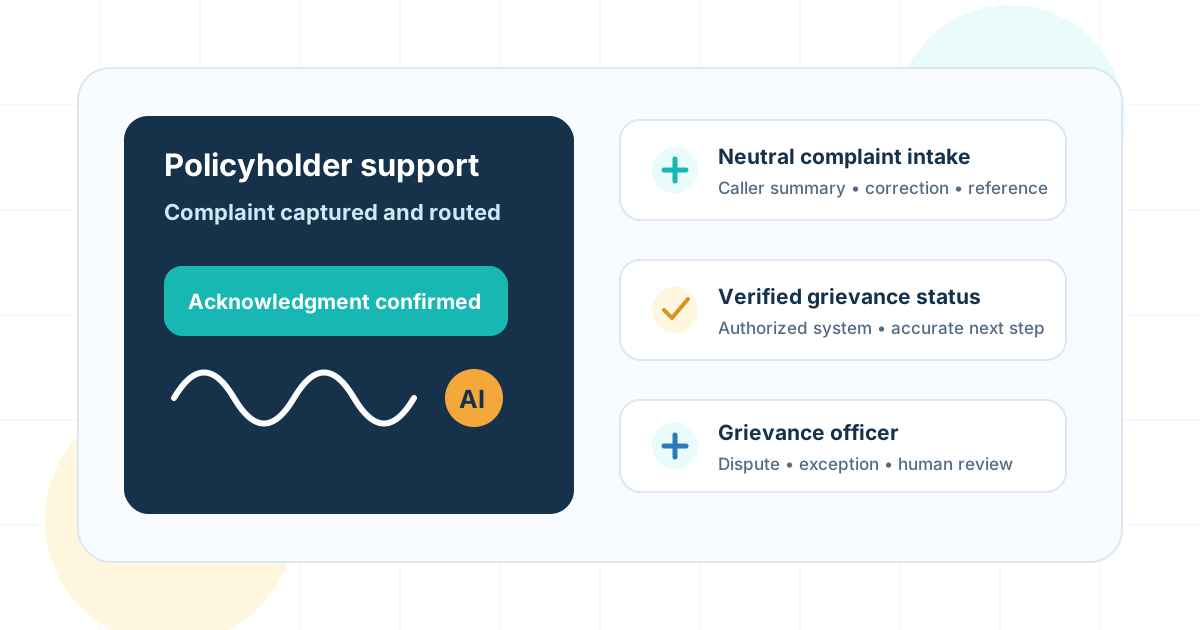
Short answer: An AI voice agent can help an insurer capture a service complaint, confirm an acknowledgment recorded by the insurer’s system, provide an authorized status, and connect the policyholder with the right grievance owner. It should not decide claim disputes, promise a resolution, or represent that a complaint has been filed with IRDAI unless an authorized process confirms that action.
This guide covers inbound and follow-up calls about insurer service complaints in India: missed callbacks, delayed updates, document requests, policy servicing problems, and requests to check an existing grievance. It focuses on complaint handling, not first-notice claim intake or automated coverage decisions. Insurers should have their compliance and grievance teams approve the workflow against current requirements and their own procedures.
Keep complaint intake separate from complaint resolution
The first job is to understand what the policyholder says went wrong and route it correctly. The voice agent can ask for the minimum details required by the insurer’s approved intake process, summarize the concern neutrally, and read the summary back for correction. Avoid leading questions that imply the caller caused the problem or that the insurer has already reached a decision.
Classify the issue into the insurer’s categories, such as policy servicing, premium or payment, claim communication, document handling, agent or intermediary conduct, or a previous complaint that remains unresolved. Preserve the caller’s own account and distinguish verified account facts from what the caller reports. Do not downgrade a complaint to a routine enquiry just to keep it in an automated queue.
Confirm receipt only when the system confirms it
If the insurer’s grievance platform accepts the complaint, the agent can share the acknowledgment or reference returned by that system and the channel through which the customer can follow up. If the system created only a draft, callback task, or internal note, describe that accurately. A call recording or CRM note alone does not prove that a formal grievance was registered.
Before launch, define what counts as a successful submission, which fields are mandatory, how duplicate complaints are detected, and what happens when the system times out after a possible write. Check for an existing record before retrying. The policyholder should not receive multiple references because the agent blindly repeated a request.
Make status calls traceable and useful
For an existing complaint, follow the insurer’s identity and authorization process before disclosing account-specific information. Read status, owner, requested documents, or next steps only from the authorized grievance system. If the status is stale, missing, or inconsistent, say that it could not be confirmed and arrange a tracked callback.
Keep service updates distinct from decisions. The agent may relay a recorded request for additional information, but should not decide whether that request is justified. It may share an insurer-recorded resolution, but should not interpret the decision, advise the policyholder to accept it, or mark a complaint resolved just because a call ended.
Explain the insurer’s route and official escalation options
The insurer should provide current, approved wording for its grievance redressal officer, complaint channels, and expected next steps. IRDAI’s Bima Bharosa materials describe complaint registration and status tracking, and explain routes for taking an unresolved or unsatisfactory grievance further. Because processes and time limits can change or depend on the circumstances, the voice agent should point customers to the official source and the insurer’s current procedure instead of improvising a deadline.
Do not imply that an insurer’s internal voice workflow is the Bima Bharosa portal. Unless the insurer has an authorized integration and has verified that the complaint was accepted there, direct the policyholder to the official Bima Bharosa portal for applicable registration and tracking. For a broader overview of safe financial-services workflows, see the BFSI voice-agent guide and India compliance checklist.
Route exceptions to an accountable human owner
Offer a simple route to a person. Escalate claim repudiation disputes, repeated unresolved contact, allegations of misconduct, suspected fraud, threats of legal action, vulnerable-customer concerns, privacy requests, and any case requiring discretion. The handoff should include the complaint reference when verified, the caller’s stated issue, actions already taken, preferred callback window, and why the case was escalated.
If a live transfer is unavailable, create a tracked callback with a named team or queue and tell the caller what is confirmed. Do not promise a callback time unless the receiving team has committed to it. Urgent safety or medical situations should follow the insurer’s approved emergency guidance, separate from routine grievance handling.
Protect policyholder information
Collect only fields necessary for the approved complaint task. Verify the caller before discussing policy, payment, health, or claim details; a phone number or policy reference alone may not be sufficient. Do not ask callers to speak full bank credentials, passwords, one-time codes, or unnecessary medical details into a general-purpose call transcript.
Restrict voice-agent access to the grievance information required for the use case. Keep API credentials server-side, define who can access recordings and summaries, and follow the insurer’s approved retention and deletion rules. Privacy complaints and requests to correct personal information should be routed to the designated privacy process.
Test the workflow against the underlying record
Before launch, use a controlled environment and test cases with grievance operations, customer service, compliance, and information security:
- A new complaint is accepted and receives a reference from the system.
- The platform times out after it may have accepted the complaint.
- A duplicate complaint exists for the same issue.
- The caller corrects the summary or disputes the category.
- The caller asks about another person’s complaint or fails verification.
- The status feed is stale or contradicts an earlier update.
- A caller disputes a claim decision or alleges staff misconduct.
- The requested human transfer or callback queue is unavailable.
- The caller asks how to use the official regulator grievance channel.
Review call transcripts alongside the grievance-system record and receiving queue. Confirm that the agent did not invent a reference, misstate a status, silently close a complaint, or promise a deadline. Verify that escalated cases arrive with enough context for staff to continue and that language changes or interruptions do not erase the complaint details.
Track accepted complaint submissions, acknowledgment accuracy, correct routing, status accuracy, successful handoffs, repeat calls, reopened cases, missed internal service targets, duplicate records, complaints about the agent, and staff correction time. Report these operational measures separately from grievance outcomes; resolution depends on the insurer’s review and should not be attributed to automation without a suitable evaluation.
Frequently asked questions
What can an AI voice agent do for insurance complaints?
It can capture the policyholder’s issue, confirm receipt when the insurer’s system records it, share an authorized complaint status, explain the insurer-approved next step, and route unresolved or sensitive cases to a grievance officer or service team.
Can an AI voice agent resolve an insurance grievance?
It may handle approved administrative steps and common service questions, but it should not decide coverage, reject a complaint, change a claim decision, or close a grievance unless an authorized insurer workflow records that outcome.
Can a voice agent file a complaint on Bima Bharosa?
Do not assume an insurer voice agent can submit directly to Bima Bharosa. It should direct policyholders to the official portal or approved insurer channels unless a formally authorized integration and process allow submission.
How should an AI agent share a grievance status?
After following the insurer’s identity and authorization checks, read only the current status returned by the authorized grievance system. If the record cannot be verified, create a tracked callback instead of guessing.
When should an insurance complaint call go to a person?
Escalate disputes, claim rejections, suspected fraud, hardship, legal threats, privacy concerns, urgent harm, repeat unresolved contacts, and any request for a judgment or exception to a trained human owner.
What should insurers measure in a voice-agent grievance pilot?
Measure accurate complaint capture, confirmed acknowledgments, status accuracy, successful handoffs, repeat contacts, reopened complaints, missed deadlines, complaints about the automation, and staff correction effort.
Related guides
Continue with the insurance claims intake guide, BFSI voice-agent guide, security checklist, human handoff guide, and AI voice agent testing checklist.
Put these ideas into production
Deploy AI voice agents in minutes and build outbound, inbound, and follow-up workflows on one platform.
Related Articles
AI Voice Agents for Insurance Claims in India: Intake and Status Updates
A practical guide to insurance claim voice agents in India: capture first-notice details, share verified status, request documents, and route coverage or settlement decisions to claims professionals.
AI Voice Agents for BFSI, NBFCs, and Loan Collections
Learn how BFSI, NBFC, lending, and insurance teams in India use AI voice agents for reminders, collections follow-ups, renewals, application status updates, and customer support workflows.
Is Your AI Voice Agent Secure Enough for Customer Calls?
Use this AI voice agent security checklist to protect call recordings, transcripts, customer data, tool access, prompt injection surfaces, retention policies, and audit logs.
Is AI Calling Legal in India? Consent, DND, Recording, and TRAI Checklist
A practical India compliance checklist for AI voice agents covering consent, DND, UCC, DLT, call recording, DPDP data protection, WhatsApp follow-ups, and safe human handoff.
When Should an AI Voice Agent Transfer to a Human?
Learn when an AI voice agent should transfer to a human, how cold transfer, warm transfer, smart routing, and context handoff work, and what Indian businesses should test before launch.
How Do You Test an AI Voice Agent Before It Goes Live?
A practical AI voice agent testing checklist for teams preparing to launch real customer calls. Learn how to test latency, Hindi and Hinglish conversations, interruptions, tool calls, handoff, and production readiness.