AI Voice Agents for Insurance Claims in India: Intake and Status Updates
AI Voice Agents for Insurance Claims in India: Intake and Status Updates
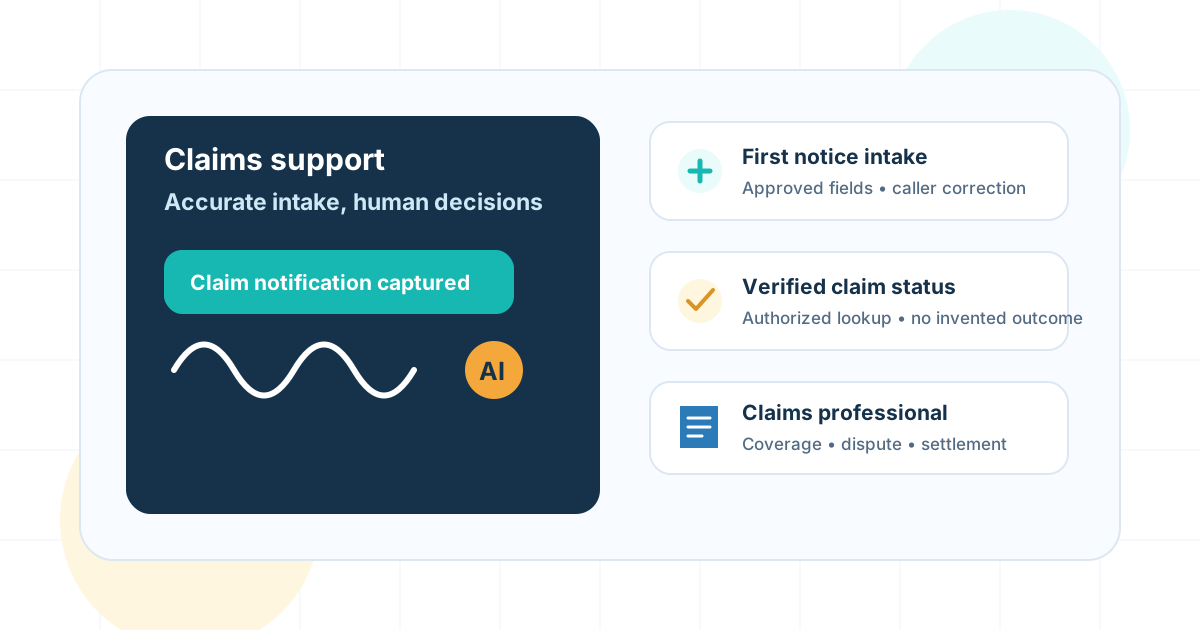
Short answer: An AI voice agent can capture an initial claim notification, collect approved details, share a verified claim status, and remind a customer about documents. It should not determine coverage, liability, fraud, or settlement. Every account lookup needs the insurer’s identity checks, and every submission should be described according to the system’s actual response.
This guide is for insurers, TPAs, brokers, and claims operations teams considering voice support for motor, health, property, or other claims. It covers administrative intake and follow-up, not claims adjudication or legal advice. Each insurer should approve the exact scripts, permissions, retention, and escalation rules for its products and channels.
Separate claim intake from claim decisions
The first phone contact may be a notification that an event occurred, a request for help with next steps, a document question, or a status enquiry. These are not the same as deciding whether the event is covered or how much should be paid. A safe voice workflow makes that distinction explicit.
| Call reason | Bounded voice-agent task | Claims-professional handoff |
|---|---|---|
| Initial loss notification | Capture the event date, broad incident type, contact details, and approved reference fields | Caller asks about coverage, liability, valuation, or whether to proceed with repairs |
| Existing claim status | Verify the caller and read the permitted status from the claim system | No matching record, conflicting status, delay dispute, or sensitive detail |
| Document follow-up | Explain which approved document is outstanding and how to submit it securely | Customer disputes the request or cannot use the channel |
| Appointment or inspection | Capture preferred timing or share a confirmed appointment from the authorized system | Availability is uncertain or customer has a special requirement |
| Complaint or hardship | Record the concern and route it to the responsible claims team | Always when a decision, exception, distress, or urgent need is raised |
Choose one low-risk administrative journey first, such as status lookup after verification or a reminder to use a secure document channel. Do not start with automated settlement, denials, fraud questioning, or coverage interpretation.
Design first-notice intake to capture facts, not conclusions
An initial notice should gather the minimum fields the insurer has approved for that claim type. It might include the policy or claim reference when available, date and broad type of event, callback details, and a concise description in the customer’s own words. The specific data model belongs to the insurer and may differ by product.
Use neutral questions. Do not lead the caller toward a cause, assign blame, decide whether an event is covered, or turn uncertain speech into a definitive statement. Read back key details and let the caller correct them. Preserve the original description alongside normalized fields where the insurer’s process allows it.
If the claims system accepts a notification, the agent can communicate that it was received and provide the returned reference if permitted. If the workflow creates only a draft or callback task, say that accurately. A completed call is not proof that a claim was registered.
Make status answers traceable to the claim system
Before discussing an existing claim, follow the insurer’s identity and authorization process. Do not disclose claim existence, policy details, medical information, payment information, or another person’s data until the required checks pass. Knowing a phone number or claim reference alone may not authorize a disclosure.
Read only the status and next step that the authorized system makes available to the caller. A status may be pending review, waiting for information, appointment scheduled, or another insurer-defined state. Do not invent an expected settlement date or tell the claimant that a payment is approved unless the record confirms it and the insurer permits the agent to share it.
When a record is missing, stale, inconsistent, or ambiguous, offer a tracked callback from the claims team. Include the question, verified claim reference where allowed, and best contact time in the handoff. Do not repeatedly re-query or create duplicate cases after a system timeout; check whether the earlier action succeeded first.
Keep document requests and sensitive information secure
The voice agent may explain an approved document request and direct a claimant to the insurer’s secure upload process. It should not ask the caller to read full identity numbers, bank details, medical records, or payment credentials aloud into an ordinary call transcript. If a customer cannot use the approved channel, create a support task for an authorized person.
Claims may include personal, health, financial, or incident information. Limit which fields the agent can retrieve, keep credentials server-side, restrict access to recordings and summaries, and follow the insurer’s retention and review policy. A request to correct personal information or report suspected account misuse should go to the insurer’s designated privacy or security process.
Define escalation for distress and urgent events
Some callers are dealing with an injury, property damage, or a stressful event. Provide a quick way to reach a person. If the caller describes immediate danger or a medical emergency, follow the insurer’s approved urgent guidance and direct them to the appropriate emergency service; do not keep them in a claim intake script.
Route complaints, disputes, suspected fraud, threats of legal action, vulnerable-customer concerns, and any request to interpret policy terms to a claims professional. The agent should identify itself as an automated assistant where required by the organization’s approved call policy and should never impersonate an adjuster or promise a claim result.
For the broader financial-services guardrails, see the BFSI voice-agent guide, security checklist, compliance guide for India, and human handoff guide.
Connect claims systems with verifiable outcomes
Map every interaction to the system that owns it: policy verification, claims intake, status lookup, document management, appointment scheduling, complaint handling, or call routing. Define the exact success response for each read or write and the team that handles a timeout. Keep system outcomes distinct from call dispositions and agent summaries.
Give the voice workflow the minimum permissions needed for its use case. Test duplicate prevention, authorization failures, stale status, and a down claims platform. The agent should not retry a claim submission blindly, merge records based on a name match, or treat a queued request as completed.
Test the claims flow before launch
Use a sandbox or staff-controlled test claims where possible. Cover normal cases and exceptions:
- A new notification with all required fields and a successful system response.
- A caller cannot provide a required field or corrects the event date.
- The claims system times out after a possible notification write.
- A caller asks whether damage or treatment is covered.
- Identity checks fail or the caller asks about another person’s claim.
- The status feed is stale or two systems disagree.
- A document link fails or the caller cannot upload the requested file.
- A claimant disputes a decision, reports distress, or describes immediate danger.
- The caller changes language, interrupts, or asks for a claims professional.
Review the recording or transcript and the underlying claim-system record together. Confirm that the agent did not infer facts, reveal unauthorized information, give a claim decision, or describe a pending action as complete. Test after-hours escalation and ensure staff receive the context needed to continue without asking the claimant to repeat the entire story.
Measure required-field completion, accepted initial notifications, status accuracy, secure document follow-through, duplicate submissions, transfer success, repeat calls, complaints, and staff correction effort. Report administrative outcomes separately from approval rates, settlement amounts, or claim cycle time; those outcomes depend on broader claims decisions and should not be attributed to voice automation without a controlled evaluation.
Frequently asked questions
What can an AI voice agent do in an insurance claims workflow?
It can capture an initial claim report, collect approved details, share a status returned by the insurer’s authorized system, remind a claimant about required documents, and route exceptions to a claims professional.
Can AI decide whether an insurance claim is covered?
A voice agent should not make coverage, liability, fraud, or settlement decisions. It may explain approved process information and route questions to an authorized claims professional.
Can an AI voice agent register a claim?
It can submit an initial notification through an authorized claims workflow if required fields are collected and the system confirms receipt. It should say “notification received” or “request submitted” accurately and not imply that the claim is approved.
Can a voice agent provide claim status updates?
It may share a permitted status after the insurer’s required identity checks and only from a current authorized claim system. If the record is unavailable or ambiguous, it should create a callback request instead of guessing.
How should an insurer handle sensitive claim details?
Collect only what the approved intake requires, verify the caller before discussing an existing claim, restrict access to recordings and summaries, and move medical, financial, or identity documents through approved secure channels.
How should an insurer measure a claims voice-agent pilot?
Measure complete and accepted notifications, status accuracy, document-request completion, successful handoffs, duplicate claims, repeat calls, complaints, and staff correction effort. Keep intake and administrative measures separate from claim approval or settlement outcomes.
Related guides
Continue with the BFSI AI voice agent guide, AI voice agent security checklist, human handoff guide, and voice-agent testing checklist.
Put these ideas into production
Deploy AI voice agents in minutes and build outbound, inbound, and follow-up workflows on one platform.
Related Articles
AI Voice Agents for BFSI, NBFCs, and Loan Collections
Learn how BFSI, NBFC, lending, and insurance teams in India use AI voice agents for reminders, collections follow-ups, renewals, application status updates, and customer support workflows.
Is Your AI Voice Agent Secure Enough for Customer Calls?
Use this AI voice agent security checklist to protect call recordings, transcripts, customer data, tool access, prompt injection surfaces, retention policies, and audit logs.
Is AI Calling Legal in India? Consent, DND, Recording, and TRAI Checklist
A practical India compliance checklist for AI voice agents covering consent, DND, UCC, DLT, call recording, DPDP data protection, WhatsApp follow-ups, and safe human handoff.
When Should an AI Voice Agent Transfer to a Human?
Learn when an AI voice agent should transfer to a human, how cold transfer, warm transfer, smart routing, and context handoff work, and what Indian businesses should test before launch.
How Do You Test an AI Voice Agent Before It Goes Live?
A practical AI voice agent testing checklist for teams preparing to launch real customer calls. Learn how to test latency, Hindi and Hinglish conversations, interruptions, tool calls, handoff, and production readiness.
AI Voice Agent Implementation Guide for India: Step-by-Step
Complete step-by-step guide to implementing AI voice agents in India. Learn how to plan, deploy, test, and scale voice AI with Hindi support, TRAI compliance, telephony integration, and production best practices.