How to Set Up an AI Receptionist Agency’s First Client
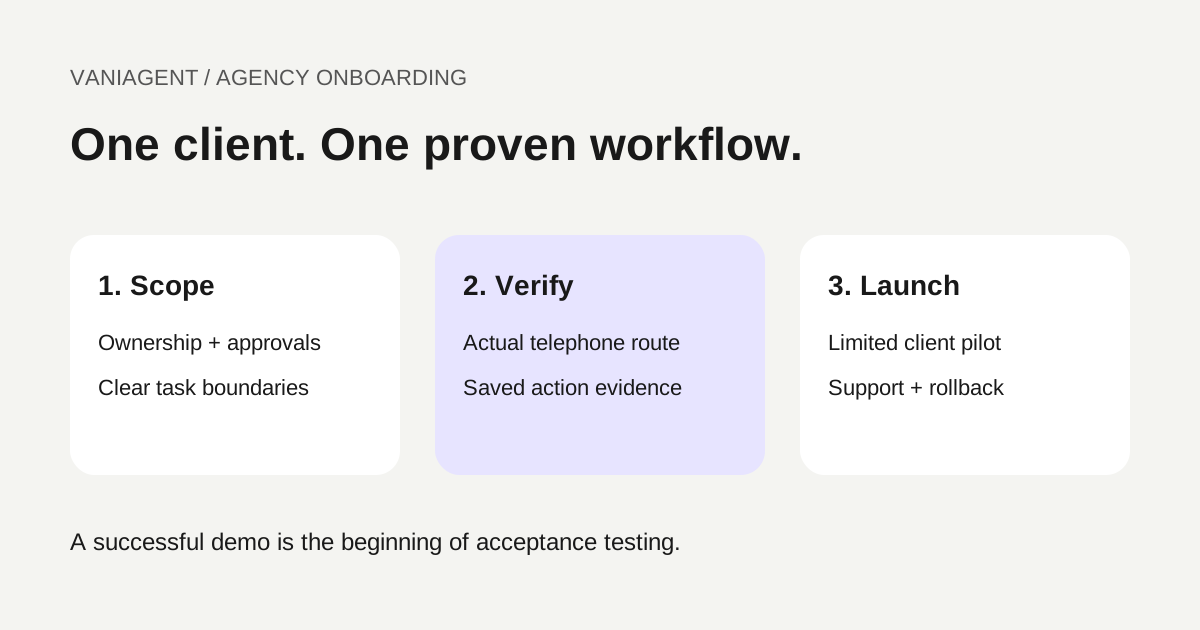
Set up an AI receptionist agency's first client around one approved workflow and a testable launch decision. Agree who owns the accounts and number, collect the client's verified information, configure a test route, inspect real action results and keep a staff fallback available during the pilot.
The first delivery should establish a repeatable operating process. A polished demo is useful, but it does not prove the correct branch calendar was updated, a transfer reached staff or the client can operate the service after handover.
This guide provides a proposed onboarding plan for agencies serving Indian businesses. It does not describe a VaniAgent reseller agreement, white-label licence or guaranteed onboarding timeline. Confirm the supplier's commercial permissions and supported configuration before selling those capabilities.
For the underlying use case, see the AI receptionist guide for India.
Phase 1: define one deliverable with the client
Choose a narrow task with an observable outcome. For example, answer approved branch questions and transfer a caller to the staffed desk, with a callback request if nobody answers. That is easier to accept than “automate reception.”
Write the scope in ordinary language:
| Scope decision | What the client must approve |
|---|---|
| Calls included | Number, branch, direction, languages and operating hours |
| Tasks allowed | Approved answers, lookups and actions |
| Tasks excluded | Decisions the agent must route to staff |
| Handoff | Destination, staffed hours, timeout and fallback |
| Information handling | Notice, recording choices, retention and access |
| Success | Verified outcome and acceptable failure response |
| Commercial scope | Setup, recurring costs, usage, support and changes |
Do not add booking, payments or promotional campaigns because they are available in a platform menu. Each changes the task, authorization or operational risk. Add them through an explicit scope change and the relevant tests.
Phase 2: settle ownership before creating accounts
Decide who owns the phone number, carrier account, AI account, CRM connection, scheduling data and storage. Record the administrator and billing owner separately from the person doing the configuration.
Client-owned accounts may let the client retain direct control and supplier billing. Agency-managed accounts may simplify managed operations but create shared dependencies and an exit obligation. Document access, spending limits, support authority and how resources would be transferred or replaced.
Twilio's subaccount documentation, checked on 16 October 2026, explains customer resource segmentation under a main account. It also states that usage is billed to the main account and suspension of that account affects its subaccounts. This is a provider-specific example: segmentation is not independent billing or immunity from parent-account problems.
Check the actual supplier's terms for managed service or resale. Do not advertise white-label rights, unrestricted number portability or transferable licences without written confirmation. Keep credentials out of spreadsheets, prompts and client-facing screenshots.
Phase 3: collect the minimum approved information
Ask for current service details, prices, branch address, regular and exceptional hours, staffed destinations and policy wording relevant to the scoped task. Identify the owner who can approve corrections.
Use the information-maintenance worksheet rather than copying an entire website without review. Record effective dates and branch scope. If the website and staff price list disagree, resolve the difference before training the agent to quote either amount.
For integrations, use fictional records first. Collect only the access needed for the approved task and establish what the agent may read or write. A receptionist that checks appointment availability does not automatically need permission to edit every calendar or export all customer contacts.
If the client cannot supply an authoritative answer, define a staff fallback. Do not fill gaps with plausible business claims or generic industry policies.
Phase 4: configure a separate test route
Build the workflow on an approved test number or other controlled route that reflects the intended deployment. Keep the existing reception path available. A browser-only preview can help tune wording, but it does not establish carrier audio, destination metadata or telephone transfer behaviour.
Configure the greeting, branch confirmation, approved knowledge, action boundaries and handoff. Give every tool an explicit success, failure and uncertain-result path. The agent should announce completion only after a verified action result.
Keep a configuration identifier and a record of the source versions used. Save the previous working setup before making changes. For a multi-branch client, begin with one location and use the branch-routing guide before expanding.
Phase 5: inspect outcomes using an acceptance matrix
Ask client staff to participate in fictional test cases. Use the intended staff destination and integration wherever the test scope permits it. Record the result and supporting evidence, rather than marking a test passed because the voice sounded natural.
| Test | Required evidence |
|---|---|
| Approved FAQ | Spoken answer matches the applicable source |
| Unknown or disputed price | Honest escalation rather than an invented amount |
| Branch correction | New branch mapping used for subsequent actions |
| Closed-hours call | Correct approved fallback |
| Staff answers transfer | Intended person receives caller and relevant context |
| Staff does not answer | No transfer loop or false handoff claim |
| Tool times out | Clear pending or recovery state; no false success |
| Caller requests a person | Approved staff path offered |
| Recording objection | Verified control or accurate alternative |
| Two overlapping calls | Capacity and overflow match the quoted configuration |
If booking is in scope, check the saved calendar reference, branch, time and duplicate handling using the double-booking prevention guide. A spoken confirmation without a saved record is a failed test.
Keep unresolved tests open. Client sign-off should refer to a specific configuration, scope and known limitations rather than a broad statement that “AI is working.”
Budget hands-on work separately from external waiting
An agency can plan its effort in short work blocks without promising that verification or provisioning will finish at the same speed. The following is an illustrative effort allocation for a simple first workflow, not a delivery guarantee.
| Work block | Illustrative agency effort |
|---|---|
| Discovery and scope draft | 45 minutes |
| Ownership and access review | 30 minutes |
| Approved information preparation | 60 minutes |
| Initial test configuration | 90 minutes |
| Acceptance calls and record review | 90 minutes |
| Handover and pilot preparation | 45 minutes |
| Total hands-on planning allowance | 6 hours |
Account verification, carrier provisioning, complex integrations, revisions and client availability are outside that allowance. Estimate them separately. If a dependency remains unverified, keep the launch pending instead of compressing the test period to meet an optimistic sales promise.
Phase 6: launch a limited pilot with a rollback route
Obtain the client's authorization for the exact routing change and timing. Use a limited branch, window or traffic allocation supported by the phone setup. Do not move all published numbers merely because one test call passed.
Document who monitors the pilot and who can revert to staff. Capture the current route before switching, then verify incoming behaviour and the fallback immediately afterward. Stop the affected workflow if consequential actions or routing are unreliable.
Define the pilot period, expected call mix and review coverage. Track verified task outcomes, unanswered handoffs, caller corrections, duplicate actions and actual usage. Avoid promising savings from a tiny sample or describing answered calls as completed business tasks.
Use the hallucination monitoring plan for evidence-based review and the capacity worksheet before increasing simultaneous traffic.
Phase 7: hand over a service the client can operate
Provide a concise operating pack:
- Approved scope, number and account ownership, and access roles.
- Deployed configuration and business-information versions.
- Test results, known limitations and the pilot review findings.
- How to request price, hours and policy updates.
- Staff handoff, incident contact and rollback instructions.
- Written recurring costs, allowances, overages and support boundaries.
- Retention, authorized exports and an agreed exit process.
Confirm that a client representative can use the operating procedure without relying on the original engineer's memory. Test the contact route for urgent corrections and identify who approves them.
Keep exit terms concrete: what can be exported, which resource transfers are supported and what must be re-provisioned. Do not promise automatic migration of phone numbers, customer history or billing arrangements that the supplier has not confirmed.
Turn the first engagement into a reusable checklist
Reuse the onboarding questions, acceptance matrix and evidence format for later clients. Keep each client's information, access and resource mapping isolated. A reusable workflow template should not carry the first client's phone numbers, credentials or policies into a new account.
Automate validation and repeatable test execution where useful. Leave business approvals, account authority and client-specific exceptions with the responsible people. The first client is ready for wider traffic when the tested route, saved outcomes, support ownership and commercial scope agree with what was sold.
Frequently asked questions
How should an AI receptionist agency onboard its first client?
Scope one workflow, agree account and number ownership, collect approved business information, configure a test route and verify actions and fallback. Obtain client sign-off on the tested configuration before moving a limited amount of live traffic.
Should the client own the telephone and AI accounts?
Decide and document ownership before setup. Client-owned accounts can simplify direct control, while agency-managed accounts may support managed operations. Compare billing responsibility, access, suspension risk, exports and exit arrangements rather than assuming one model fits every engagement.
Can an agency promise a complete launch in a few hours?
It can estimate configuration work, but account verification, number provisioning, integrations and client approvals may take longer. Separate hands-on work estimates from external waiting time and make launch conditional on acceptance tests.
What should the first receptionist workflow include?
Start with a narrow, approved task such as answering branch FAQs and routing a staff request. Add booking writes or outbound follow-ups only when their authorization, integration and failure recovery have been tested.
Does a successful demo prove the client is ready to launch?
No. Test the intended account, telephone route, staff destination and business integration. Inspect saved actions and failure outcomes as well as the conversation.
What should the agency hand over to the client?
Provide the approved scope, ownership and access register, configuration version, test evidence, operating guide, support contacts, costs and exit process. Share credentials through an appropriate secure mechanism rather than putting secrets in a handover document.
Scope a first-client pilot
Bring the client's approved workflow, account ownership plan and staff destinations to a scoped VaniAgent demonstration. Confirm supplier terms and the exact supported configuration before promising a managed service.
Put these ideas into production
Deploy AI voice agents in minutes and build outbound, inbound, and follow-up workflows on one platform.
Related Articles
AI Receptionist in India: Answer Calls and Book Appointments
AI receptionist for Indian businesses: answer calls, book verified appointments, recover missed calls, handle routine questions, and route exceptions to staff.
How to Keep an AI Receptionist’s Prices, Hours and FAQs Up to Date
Maintain AI receptionist information with approved sources, effective dates, holiday overrides, refresh checks, conflict handling and update acceptance tests.
AI Receptionist for Multiple Branches: Route Calls to the Right Location
Plan an AI receptionist for multiple branches with a routing matrix, separate calendars, holiday hours, wrong-branch recovery and a launch checklist.
How to Monitor AI Voice-Agent Hallucinations After Launch
Monitor voice-agent hallucinations with a review rubric, random and targeted sampling, tool-result verification, honest error rates and regression tests.